
Page label: Government Contracting
Revision date: August 31, 2026
Author: Penny Marbel (JPI Worldwide)
FAR 52.225-19 establishes requirements for contractor personnel performing outside the United States in a designated operational area or while supporting certain diplomatic or consular missions. The clause addresses personnel status, use of force, logistics, security, legal compliance, readiness, accountability, weapons, evacuation, and subcontracting.
The clause also states directly that “Contractor personnel are civilians.”
That statement is important, but it does not remove the operational, legal, or contractual obligations that apply to civilian personnel supporting an overseas government mission. For primes and contracting officers, the clause should be understood as a framework for managing contractor performance in environments where military, diplomatic, government, and commercial personnel may operate together under different authorities.
This article provides a general explanation of FAR 52.225-19. The contract, solicitation, statement of work, applicable agency procedures, and current law control in each matter.
1. When Does FAR 52.225-19 Apply?
FAR 52.225-19 applies when contractor personnel are required to perform outside the United States in specified operational or diplomatic settings.
Under FAR 25.301-4, the clause is inserted in solicitations and contracts, other than personal service contracts with individuals, that require contractor personnel to perform:
- In a designated operational area during a contingency operation.
- In a designated operational area during a humanitarian or peacekeeping operation.
- In a designated operational area during another military operation or a military exercise designated by the combatant commander.
- In support of a diplomatic or consular mission designated by the Department of State as a danger-pay post.
- In support of a diplomatic or consular mission that the contracting officer determines should be subject to the clause.
A contract performed overseas does not automatically create the same obligations in every case. The contracting officer should evaluate the place of performance, mission type, contract structure, and applicable agency requirements before determining whether FAR 52.225-19 is required.
The clause may also be accompanied by additional requirements in the contract, statement of work, theater instructions, agency policies, or applicable supplements.

2. What Does “Contractor Personnel Are Civilians” Mean?
The phrase means that contractor personnel do not become members of the armed forces merely because they work in a designated operational area or near military personnel.
Definition: For purposes of FAR 52.225-19, contractor personnel remain civilian personnel and must operate within the authority granted by the contract, applicable law, their position, and approved mission procedures.
Civilian status has practical consequences.
Contractor personnel generally:
- Do not exercise military command authority.
- Do not receive authority to issue military orders solely because of their contract position.
- Do not become active-duty service members through overseas contract performance.
- Must remain distinguishable from military personnel where military clothing is authorized.
- Must comply with applicable government, host-country, and third-country requirements.
- Must follow force-protection, health, safety, and security instructions issued by the appropriate government authority.
The clause also states that service performed under the clause is not active duty or service under the specified veterans’ statutory provision. Civilian personnel may support military or diplomatic missions without being part of the military chain of command.
For primes, this distinction should be reflected in position descriptions, training, supervision, identification procedures, and subcontract terms. For contracting officers, it should be reflected in the statement of work and the administration of the contract.
3. What Are the Rules on Use of Force?
FAR 52.225-19 limits the use of deadly force by contractor personnel.
Except for the specific security-function provision in the clause, contractor personnel are authorized to use deadly force only in self-defense and in accordance with the applicable contract requirements. Contractor personnel performing security functions may have additional authority when deadly force reasonably appears necessary to execute the approved security mission to protect persons or assets.
The distinction is narrow and important.
A contractor’s technical, logistics, communications, maintenance, or administrative role does not create security authority. A contract employee may not assume that carrying equipment, working near military personnel, or operating in a dangerous environment permits the use of force beyond the authority expressly provided.
Where weapons are authorized, the clause requires additional controls. The contracting officer, subject to required approval, may authorize the carrying of weapons. The contractor must provide a specific list of personnel for whom authorization is requested and must ensure that authorized personnel:
- Are trained to carry and use weapons safely.
- Understand and follow the applicable rules for the use of force.
- Comply with applicable law, policy, agreements, and agency requirements.
- Are not prohibited from possessing firearms under applicable federal law.
- Follow instructions concerning possession, use, safety, and accountability.
Weapon authorization is not a general contractor privilege. It is a controlled contract and mission requirement.
4. Who Is Responsible for Logistics and Security Support?
Unless the contract provides otherwise, the contractor is responsible for the logistical and security support required for its personnel.
This obligation may affect pricing, staffing, mobilization schedules, travel planning, insurance considerations, equipment movement, and subcontract management. A prime should not assume that the government will provide every support function required for contractor performance.
The contract should be reviewed for requirements involving:
- Transportation and movement between processing points.
- Lodging, food, water, and sustainment.
- Security support and personal protective measures.
- Medical readiness and evacuation arrangements.
- Communications and emergency contact procedures.
- Equipment staging, replacement, and resupply.
- Personnel accountability and emergency data.
- Country, theater, or special-area clearances.
The clause permits the government to direct processing through designated departure or reception centers and to establish procedures for personnel data. Contractor personnel lists and emergency contact information must be maintained as required by the contract.

5. What Must Be Completed Before Deployment?
FAR 52.225-19 establishes preliminary personnel requirements. The specific requirements are set out in the statement of work or elsewhere in the contract.
Before departure, or before beginning performance in the applicable area, the contractor must ensure that required conditions are satisfied. These may include:
- Completion and acceptance of security and background checks.
- Medical and physical fitness.
- Required vaccinations.
- Passports, visas, entry permits, and transit documentation.
- Country or special-area clearance, when required.
- Theater clearance, when required.
- Personal security training.
- Isolated personnel training, when specified.
- Registration with the responsible U.S. embassy or consulate for applicable U.S. citizens.
The contractor must also notify personnel who are not host-country nationals or ordinarily resident in the host country that certain U.S. criminal laws may apply to conduct outside the United States. Depending on the circumstances, the Military Extraterritorial Jurisdiction Act, the War Crimes Act, and other federal statutes may be relevant.
These requirements should be treated as deployment gates rather than administrative afterthoughts. A person who is technically qualified but lacks required documentation, clearance, training, or medical readiness may not be eligible to begin performance.

6. How Does the Clause Affect Primes and Subcontractors?
Paragraph (q) requires the contractor to incorporate the substance of FAR 52.225-19, including the subcontracting paragraph, in covered subcontracts that require personnel to perform outside the United States.
This creates a direct compliance obligation for primes. Subcontractors should be evaluated before mobilization, not only after award. The prime should confirm that each subcontractor can support the applicable requirements for personnel, logistics, security, documentation, training, reporting, and emergency response.
A prime’s review may include:
- Whether the subcontractor’s scope requires overseas performance.
- Whether the subcontractor has identified all covered personnel.
- Whether the subcontract includes the required clause substance.
- Whether personnel can satisfy contract-specific readiness requirements.
- Whether the subcontractor understands government processing and reporting procedures.
- Whether the subcontractor has planned for equipment, travel, communications, and sustainment.
- Whether records can be produced for contract administration and oversight.
The contracting officer may direct the contractor to remove and replace personnel who fail to comply with applicable contract requirements. Such action may occur without limiting other contractual remedies, including termination for default or cause.
The contracting officer may modify contract terms only through the authority provided by the contract and applicable procedures. A force-protection instruction does not, by itself, authorize a contractor or other government personnel to change the contract’s terms and conditions.
7. Why Does FAR 52.225-19 Matter for Technology Infrastructure?
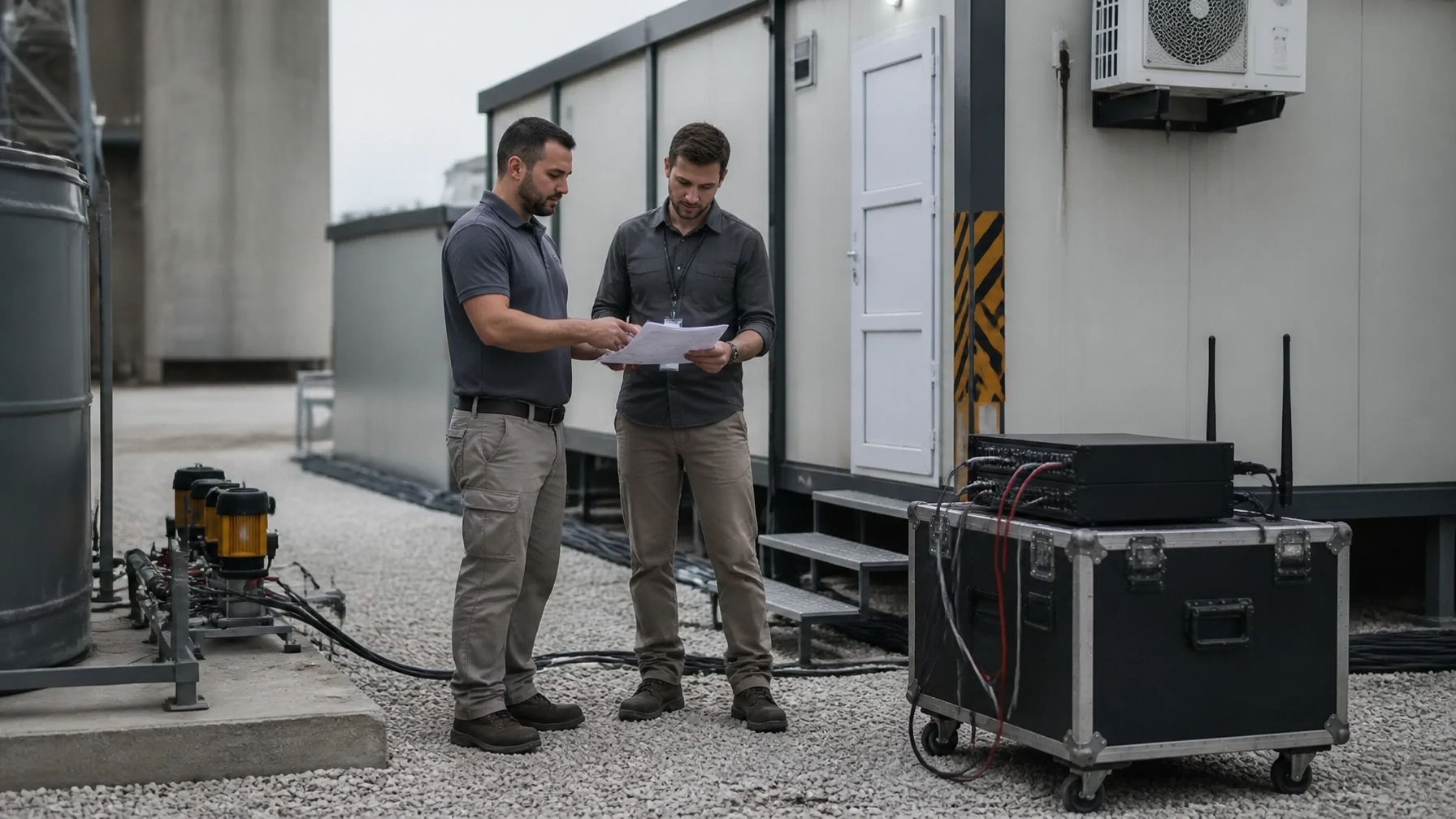
OCONUS technology work depends on more than equipment delivery. Communications, networks, cybersecurity systems, and technical infrastructure must be installed, configured, secured, tested, supported, and sustained by personnel who satisfy the applicable deployment requirements.
A technical subcontractor may need to coordinate:
- Network and communications installation.
- Secure access and system configuration.
- Field troubleshooting and commissioning.
- Equipment staging and movement.
- Personnel documentation and readiness.
- Customer training and operational handoff.
- Maintenance and replacement equipment.
- Coordination with prime-contractor, government, and local teams.
For a prime, the practical objective is to reduce the risk that a technically sound solution is delayed by incomplete readiness, unclear responsibilities, or poorly coordinated field support.
JPI Worldwide supports government agencies and prime contractors with network engineering and infrastructure, cybersecurity, systems integration, technical staffing, logistics, and CONUS and OCONUS field services. JPI’s government support capabilities are structured to support work from design and procurement through installation, testing, troubleshooting, and sustainment.
8. What Should Contracting Officers and Primes Review?
Before performance begins, the applicable contract documents should be reviewed as an integrated set.
The review should address:
- Applicability: Whether FAR 52.225-19 is required based on the place and nature of performance.
- Scope: Whether the statement of work identifies the covered personnel and operating environment.
- Support: Which logistical, security, medical, transportation, and evacuation responsibilities remain with the contractor.
- Readiness: Which clearances, training, documentation, and health requirements must be completed.
- Authority: What contractor personnel may and may not do under their assigned roles.
- Accountability: How personnel lists, emergency data, reporting, and replacements will be managed.
- Subcontracts: Whether covered subcontracts contain the required clause substance.
- Changes: Which actions require a written direction or contract modification from the contracting officer.
The review should be completed before mobilization. Responsibilities that remain undefined may create avoidable schedule, cost, safety, and performance risks.
Conclusion
FAR 52.225-19 does not treat contractor personnel as military personnel. It establishes a controlled framework for civilian performance in designated operational areas and covered diplomatic or consular missions outside the United States.
The central rule is straightforward:
Contractor personnel are civilians, but civilian status does not eliminate contractual, legal, security, readiness, or accountability requirements.
For primes and contracting officers, effective administration depends on clear scopes of work, appropriate subcontract flow-downs, documented readiness procedures, defined support responsibilities, and disciplined personnel accountability.
JPI Worldwide can discuss how its communications, network infrastructure, cybersecurity, systems integration, technical staffing, logistics, and field deployment capabilities may support a business, agency, department, prime contract, or subcontract requirement. Use the JPI contact page, email connect@jpiworldwide.com, or call +1-509-210-3023. Do not submit classified information, Controlled Unclassified Information, export-controlled technical data, credentials, or other sensitive material through the public contact form.
Sources
- FAR 52.225-19 : Contractor Personnel in a Designated Operational Area or Supporting a Diplomatic or Consular Mission Outside the United States
- FAR 25.301-4 : Contract Clause
- DFARS Subpart 225.3 : Contracts Performed Outside the United States
- JPI Worldwide Government Capabilities
- JPI Worldwide Capabilities
- JPI Worldwide Experience
- JPI Worldwide Contact